
Project
TÜV Inspector
Industry
Certifications
My Role / services provided
UX designer / Frontend developer
Date
Jan-2019 June-2019
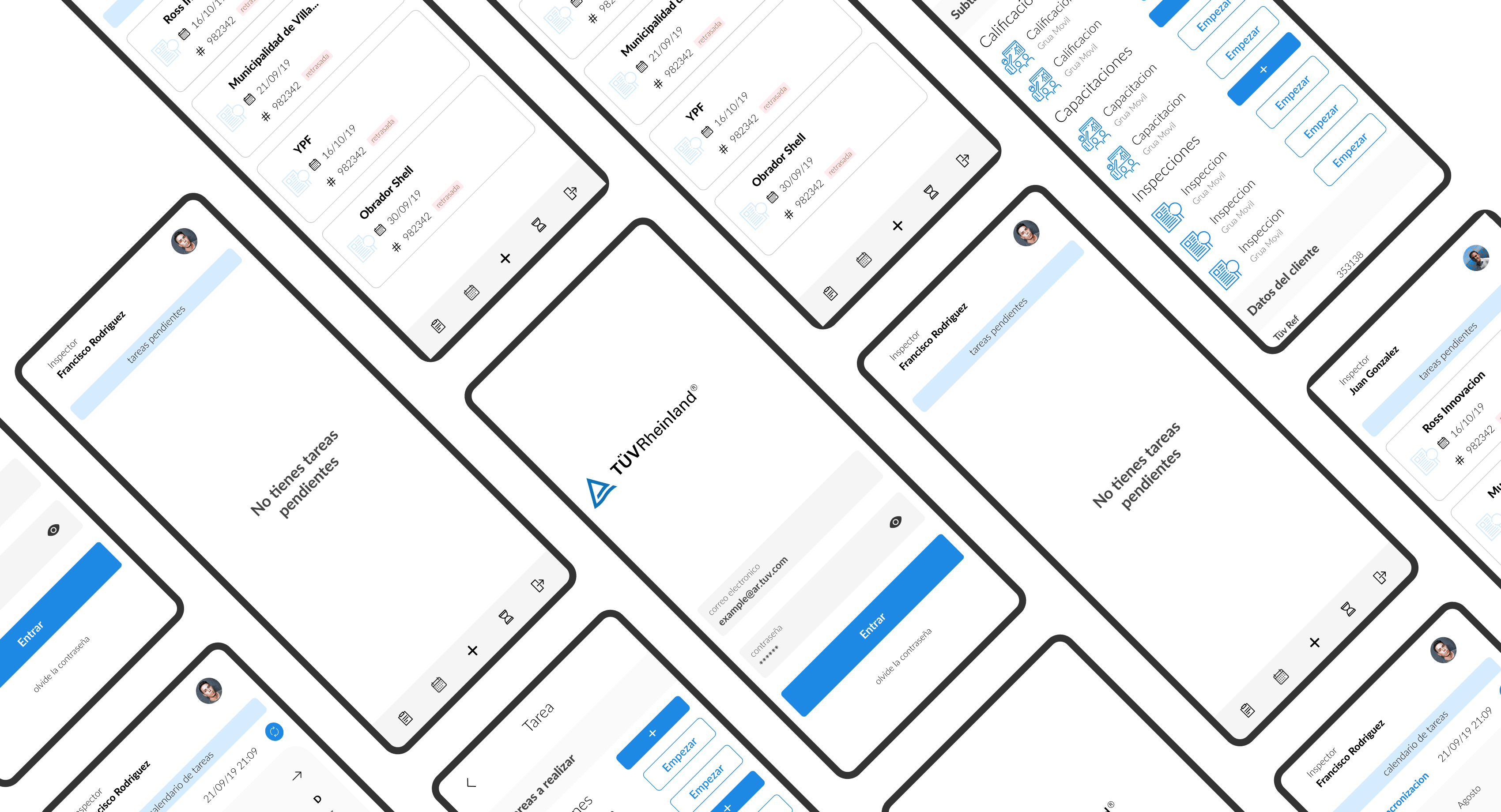
1. Introduction: Streamlining Field Inspections
TUV Rheinland is a global company specializing in certifying machinery and operating processes, ensuring adherence to quality standards like ISO 9001. The business branch dedicated to road machinery recognized the need to digitize their workflow to overcome inefficiencies in their inspection process.
The Problem:
Inspectors faced numerous challenges with paper-based forms, including poor print quality, careless data entry, and delays in returning forms, which led to difficulties in uploading information to the computer system. The goal was to create a digital tool that worked even with little or no connectivity.
2. Understanding the Users: Insights and Empathy
User Research:
The first step involved understanding the inspectors' pain points through direct interaction and feedback. This included identifying the technological structure required to make the tool effective in offline conditions.
User Personas:
The Field Inspector: Needs a reliable tool for recording data accurately in environments with limited connectivity.
The Quality Manager: Requires timely and accurate data to maintain high standards and streamline reporting processes.
3. Crafting the Solution: Designing for Real-World Use
Ideation and Sketches:
Initial requirements were gathered, and user flows, journeys, and personas were created. Wireframes were developed to visualize the app’s functionality and ensure it addressed the identified pain points.
Design Decisions:
Key decisions included:
Offline Functionality: Ensuring the tool could store data locally and sync when connectivity was available.
User-Friendly Interface: Designing intuitive flows to make data entry straightforward and minimize errors.
4. Bringing it to Life: Development and Implementation
Prototyping:
Prototypes were developed and tested early to gather user feedback and make necessary refinements. This iterative process ensured the tool met user needs effectively.
Collaboration:
The team, consisting of a backend developer, a frontend developer, and a product designer, worked closely to maintain a holistic vision of the business, processes, and product. Agile methodologies facilitated rapid iteration and development.
5. Launching and Learning: Delivering the MVP
Launch:
Within three months, an MVP was developed that integrated with existing systems, allowing inspectors to test the tool in real-world conditions. This early version enabled quick value delivery and provided a foundation for further enhancements.
Impact and Results:
Efficiency Gains: The digital tool significantly reduced data entry errors and improved the speed of reporting.
Positive Feedback: Inspectors appreciated the ease of use and reliability of the tool, even in offline conditions.
6. Reflecting on the Journey: Key Learnings and Future Directions
Challenges and Solutions:
Offline Capability: Developing robust offline functionality was crucial to ensure inspectors could work without connectivity issues.
User-Centric Design: Continuous user feedback was vital in refining the tool to meet real-world needs.
Future Recommendations:
Develop a desktop back-office version to further streamline data processing and reporting.
Explore additional features to enhance user experience and expand the tool’s capabilities.
Conclusion
Summary:
The TUV project successfully digitized the inspection process for construction machinery, overcoming the limitations of paper-based forms and ensuring reliable, efficient data entry and reporting. This case study highlights the importance of user-centered design and agile development in creating impactful UX solutions.
Testimonial:
"The new inspection tool has drastically improved our workflow, making it easier for inspectors to record data accurately and efficiently, even in remote locations." – Field Inspector